
Read this before Aug.1 (Summer reading can be a deadline or a doorway.)

When I hear the phrase summer reading, two possibilities come to mind.
One involves looming deadlines and last-minute panic.
The other involves a beach chair, a great novel, and nowhere in particular to be.
The first is probably the less favorable of the two. As a parent or former student, I know that sense of urgency never feels particularly pressing until July slips into August and the back-to-school churn begins to gain momentum.
Admittedly, I was much more aware of the Bigs’ summer assignments than the Littles’. (This is what happens when you have two sets of children more than seven years apart.)
One particularly challenging summer, my mom’s dementia had become readily apparent. I was doing my best to help her manage things while she vehemently insisted she needed no such supervision over her affairs. I found myself sneaking up to her desk to peruse the bills and bank statements when she went to the barn to feed the animals. Thank goodness those animals needed to be fed every day, twice a day!
That’s how I discovered not only that her auto insurance had lapsed, but that her homeowner’s policy had as well. The only motor vehicle insurance she had kept current was for the KTM dirt bike that sat under a dusty tarp in the garage. She insisted on two things: first, that she rode that dirt bike a lot. And second, that auto and homeowner's insurance simply weren't necessary in 2021.
So, yes, I let the Littles manage their “summer reading” and other assignments on their own. They attended a boarding school; surely they had this.
I realized my serious lapse in judgment the night before our four-hour drive north to Stratton Mountain School. The car was already packed with heaps of bedding, toiletries, and the stack of posters ordered from Amazon (did you ask me if you could order those?). I was getting ready for bed around 9:00 p.m. when I found the two of them brewing coffee and arranging the dining room table with snacks, pencils, papers, and everything else they’d need.
“What are you two doing?” I asked. (Yes, I already had my suspicions.)
Mary responded with the utmost chipperness while Aaron scrupulously attended to something deep within the belly of his backpack.
“We are getting the remainder of our summer assignments completed tonight,” she said. “Even if we have to pull an all-nighter.”
“Oh. That’s a terrible idea.”
It was the most incredulous response I could muster. I just didn’t have it in me to berate them, and what good would it have done anyway? Would it have changed anything? My window for parental management on the topic had already passed. I probably should have leaned into them around the same time I was sitting in my mother’s second-floor office, the Colorado sun streaming through the large plate-glass windows with no blinds, highlighting the insurance notice(s) on Farmer’s letterhead:
Policy canceled. Call for a free quote on reinstatement!
“I’m going to sleep,” I said. “Don’t give me any trouble when I wake you up to get on the road tomorrow.”
Moments like these have made me appreciate the other version of summer reading so much more.
The version where summer offers up something we rarely have enough of: time. Summer has a way of giving us a little more space to read simply for pleasure. I picture sitting on a beach, my heels happily digging small troughs in the sand while I gallop through a great read.
In June, I had the chance to make this vision a reality as I read Ann Patchett’s newly released novel, Whistler, in Corova, NC.
If I told you that I only read in the summer, I would not be telling the truth. Reading is a pleasure I indulge in every day. But there is something particularly satisfying about reading a book while the warmth, sounds, and rhythms of the outdoors keep you company.
The following are books from my 2026 reading life that I'd happily recommend to anyone asking me for their next read.
Picks from the '26 Pile
Non-fiction
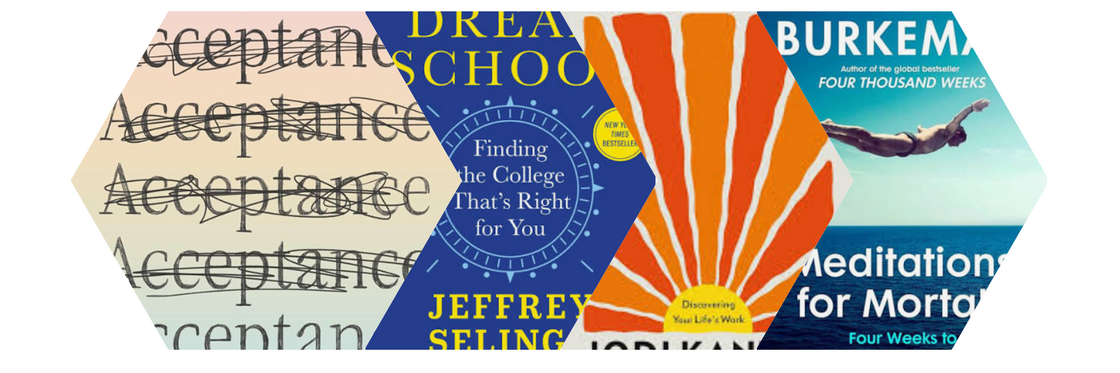
Acceptance by Emi Nietfeld
I had the pleasure of hearing this author speak at an IECA Conference. This sharp, coming-of-age memoir shares Emi’s story of making her way to Harvard and Big Tech despite growing up in foster care, institutions, and unstable housing, all while navigating her mother’s ongoing brain health issues. She pulls back the veil on the true cost of grit and what our social and educational systems demand of young people who are suffering in unspeakable situations.
Dream School: Finding the College That’s Right for You by Jeffrey Selingo
Choosing a college that is right for the student without putting the outcome and résumé first is the throughline of Selingo’s latest piece. Through case studies and surveys, he makes a strong argument for lessening the grip of brand-striving in the college search and offers practical tips for doing so.
How to Start: Discovering Your Life’s Work by Jodi Kantor
From one of the journalists who broke the Harvey Weinstein story and helped ignite the #MeToo movement, Jodi Kantor expands in How to Start on her 2025 Columbia College Class Day commencement address. In a time when young adults are struggling to find their life’s work amid division and a rapidly changing workforce, she speaks eloquently about her philosophy of “craft and need” when considering what to study and how to use an education to choose a professional path and develop a career.
Craft is a specific, hard-earned slice of expertise that makes you unique, and need is an understanding of what society will require most during your working life. Considering the intersection of “craft and need” is where to start. It’s a quick read and a great springboard for discussion with your young adult.
Meditation for Mortals: Four Weeks to Embrace Your Limitations and Make Time for What Counts by Oliver Burkeman
In a blog post earlier this year, I shared my affinity for Burkeman’s “imperfectionism” philosophy. Structured as a “four-week retreat” for busy people, he offers 28 insightful reflections on coming to terms with the reality of our finite time and energy so we can act now on what matters most.
Fiction
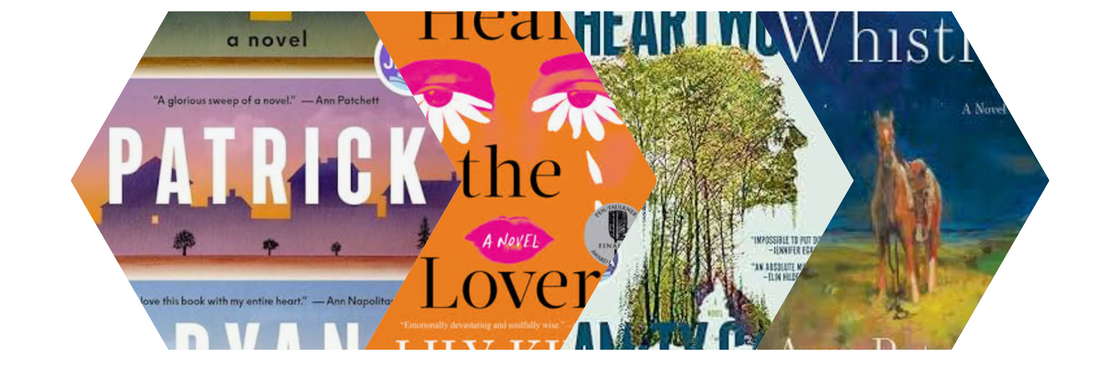
Buckeye by Patrick Ryan
Buckeye is a novel that pulls you in completely. Set in mid-century Ohio and following two marriages over the course of decades, Ryan created characters that stayed with me long after finishing. He deftly explores topics of sexuality, trauma, and the ways families often evolve and revise their histories to remain intact against the backdrop of small-town interactions and the impact of wars taking place around the globe.
Heart the Lover by Lily King
King deftly explores the nuance of a college love triangle unfolding over decades. You may want to pick up Writers & Lovers first. Be warned, you may also be inclined to purchase the card game Sir Hincomb Funnibuster after reading. (Delightfully, I found myself playing many a hand of this with my family, including my 8-year-old grandniece, on a cruise in April.)
Heartwood by Amity Gaige
If you're looking for a page-turner that also has beautiful prose and makes you want to read passages out loud to fellow book lovers, pick this one up. The plot focuses on a hiker who goes missing along the Appalachian Trail and Lieutenant Beverly “Bev” Miller of the Maine State Game Ward, who is tasked with leading the search.
Whistler by Ann Patchett
The reappearance of a long-vanished stepfather. A childhood accident where the details were long kept under wraps. A long-hidden family decision. And what revelations await us in middle age as we look back on those childhood memories and relationships. Patchett is a master at putting the quiet subtleties of life, love, family, and choices onto the page in a way that feels so relatable; I am always bereft when the pages end.
I’m currently aboard Emma Straub's American Fantasy, about a woman who unexpectedly finds herself on a boy band cruise. (Even the cover sports the colors of cotton candy.)
The season for summer reading is not over. It can be a deadline or a doorway, and I am wishing you more of the latter. (And no all-nighters in your household.)

0 comments
Leave a comment