
The Danger of 'Other' — A Call For the Humanities (Part 1)

I recently started reading the novel March, by Geraldine Brooks, on a three-legged flight back from Denver to Burlington. I came to a particularly graphic scene at Clement’s Mine, a fictitious Virginia plantation set in the 1840s, and realized this was not the first time I had read this very passage.
A few years back, this scene curdled my stomach. I had put the book down, telling myself I'd pick it back up another time. Each time I saw the spine on one of my next-to-read piles, my eyes jumped to another book until I finally moved it to a shelf. Fully forgetting about it until another pass through the Tattered Cover in Terminal C of Denver, to purchase it again.
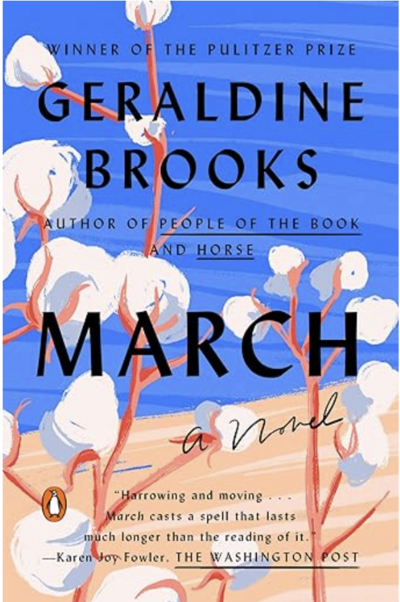
Upon boarding the third leg that Thursday evening, Senator Bernie Sanders happened to be in the seat adjacent to mine, flying from Dulles to Burlington. He asked me if I was enjoying it. I fished about to say something interesting, intelligent, and intriguing. Instead, I gave a short synopsis of the 2005 Pulitzer Prize-winning novel's premise: Mr. March, the reimagined absent father from Little Women, serves as a chaplain in the Union army. The Senator went back to his iPad and his Bailey's Irish cream, and I continued to perseverate on what I could have said better.
It wasn't until the next day that my subconscious decided to unleash a coherent reason why I felt compelled to read this book now. There are a tremendous number of parallels between the Civil War and where we are as a society. The straw man argument of "other": the false promise of power through finger-pointing and degradation when we label a soul an "other." It runs across our news feeds. Discrimination based on race, gender, ethnicity, socioeconomic status, sexual orientation, and religious viewpoints persisted, but the naive part of me thought we were progressing. I believed "other" was losing its stranglehold.
Tribalism is human, but conversing with those different from us is democracy's foundation. Yet my attempts to have reasonable discourse with close friends and family during the 2024 election often ended in a change of topic. Common ground seemed out of reach. Following the Inauguration, I kept trying with decades-long friendships and family, navigating a minefield. One conversation stood out: a hardline conservative friend agreed that violent January 6th participants should never have been pardoned. How can we support law and order while condoning those who incited violence against the Capitol Police? I tucked that common ground away for hope.
The reports of what has transpired earlier this year in the Minneapolis/St. Paul's area has been an intense, alarming, and, I daresay, cautionary tale of where our country's future is headed. Armed, masked, unidentifiable federal agents lurked outside hospitals and schools, among other places, with the intent to detain "illegal immigrants."
I am all for getting the "worst of the worst" off the streets and potentially off American soil. But how have we shifted to such extremes? A group of three federal agents takes down a man in the street. Two more join the pile on. One removes his legal sidearm, clearly yells, "I have the gun!" and then two execute him with ten shots in less than five seconds.
The video is quite clear, yet the messaging, depending on who you are listening to, is not. A US citizen and ICU nurse caring for Veterans steps in to protect a peaceful protestor, has now been labeled by those with the most power as a terrorist, an "other." (I must also add that the videos from January 6th are alarming.)
What was also happening in St. Paul showed us again that courage is often found in the face of tragedy. Members of their community were petrified to leave their homes to go food shopping, to school, or to work. Volunteers delivering groceries to neighbors were instructed to eat the papers bearing the addresses of their deliveries if they were pulled over. The courage to help feed your neighbors, to report personal experiences of bigotry and racism, and to call out the profiling and murdering of U.S. citizens and legal immigrants—who have been your neighbors—highlights that progress in a democratic society is not linear and setbacks often compound. This courage to engage the "other," even now, is a starting point.
Fundamentally, we as a functioning democratic society need to consciously engage with the "other." To reframe our hardened approaches and to have the difficult conversations with family and friends. To listen and to ask questions.
We have a responsibility to ourselves and our society to seek news that is as unbiased as possible, to consider facts over spin. I can't help but see the correlation between the sharp decline and devaluation of studying the humanities. In the traditions of liberal arts stemming from Greek and Roman curricula, the purpose was to create thoughtful, civically engaged citizens and leaders who could underpin their opinions with moral and ethical philosophies. Eric Adler writes in his book, The Battle of the Classics: How a Nineteenth-Century Debate Can Save the Humanities Today, about how the term "humanities" came to mean these "humane studies" or "studies befitting a human being."
As we navigate this divided moment, the humanities feel more urgent than ever. Check out part 2 of this post to read on. In the midst of AI disruption, the high-stakes approach to choosing a major, and the need for our teens to pick up difficult things, humanities could be the balm.

0 comments
Leave a comment